
Academics
at Holy Trinity Academy
Our Curriculum
Inspired by the beauty and richness of the Catholic faith, Holy Trinity Academy seeks to form young men and women to be joyful saints. By introducing them to subjects and ideas that build a foundation for their education as they grow and learn. By forming them in a distinctly Catholic culture, we lead students to choose for themselves the adventure of being a disciple of Christ. Students at Holy Trinity Academy enjoy a cohesive, content-rich education. A broad exposure to many different disciplines helps students expand their interests and uncover hidden talents.
Grammar Stage
Pre-Kindergarten through 4th Grade
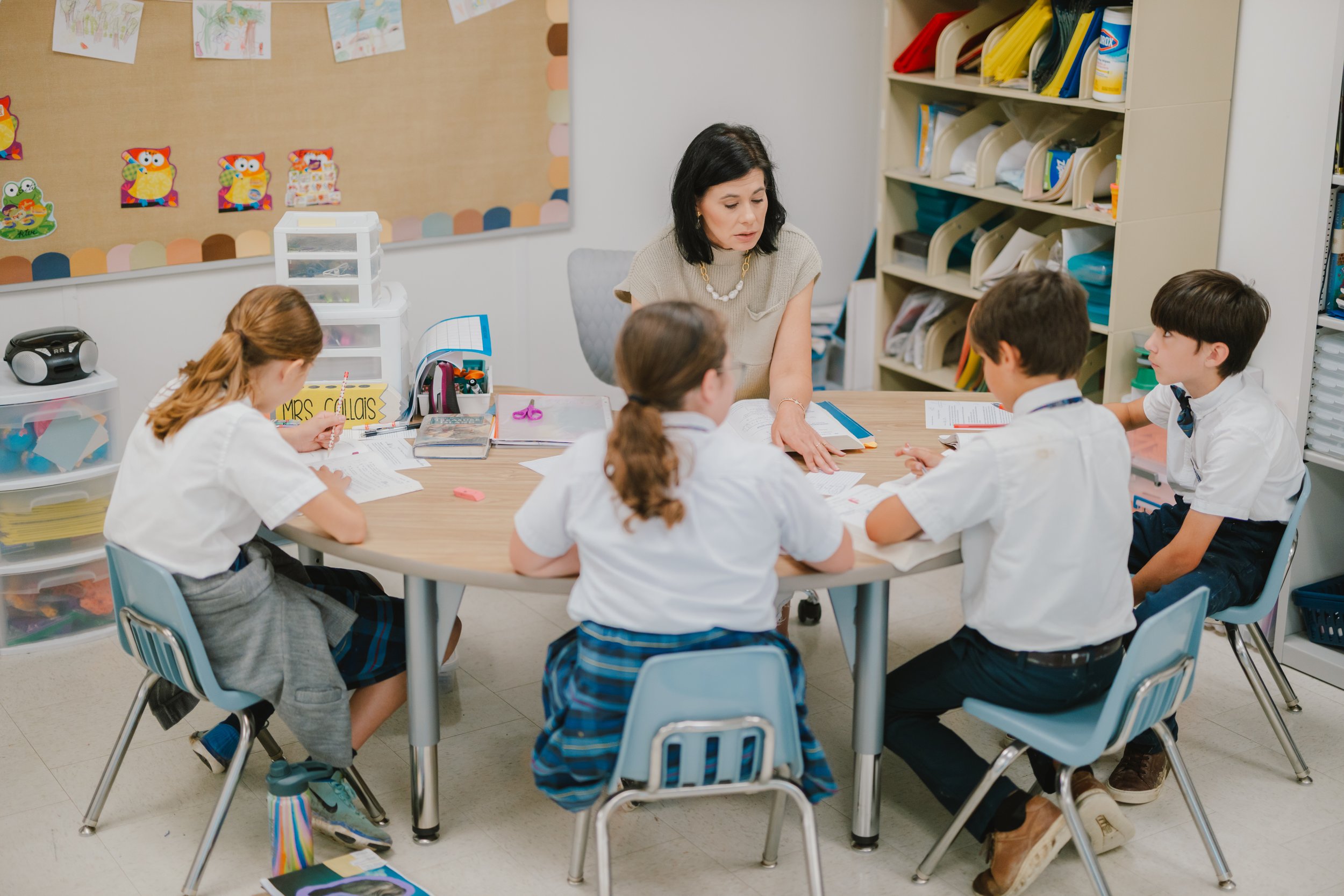
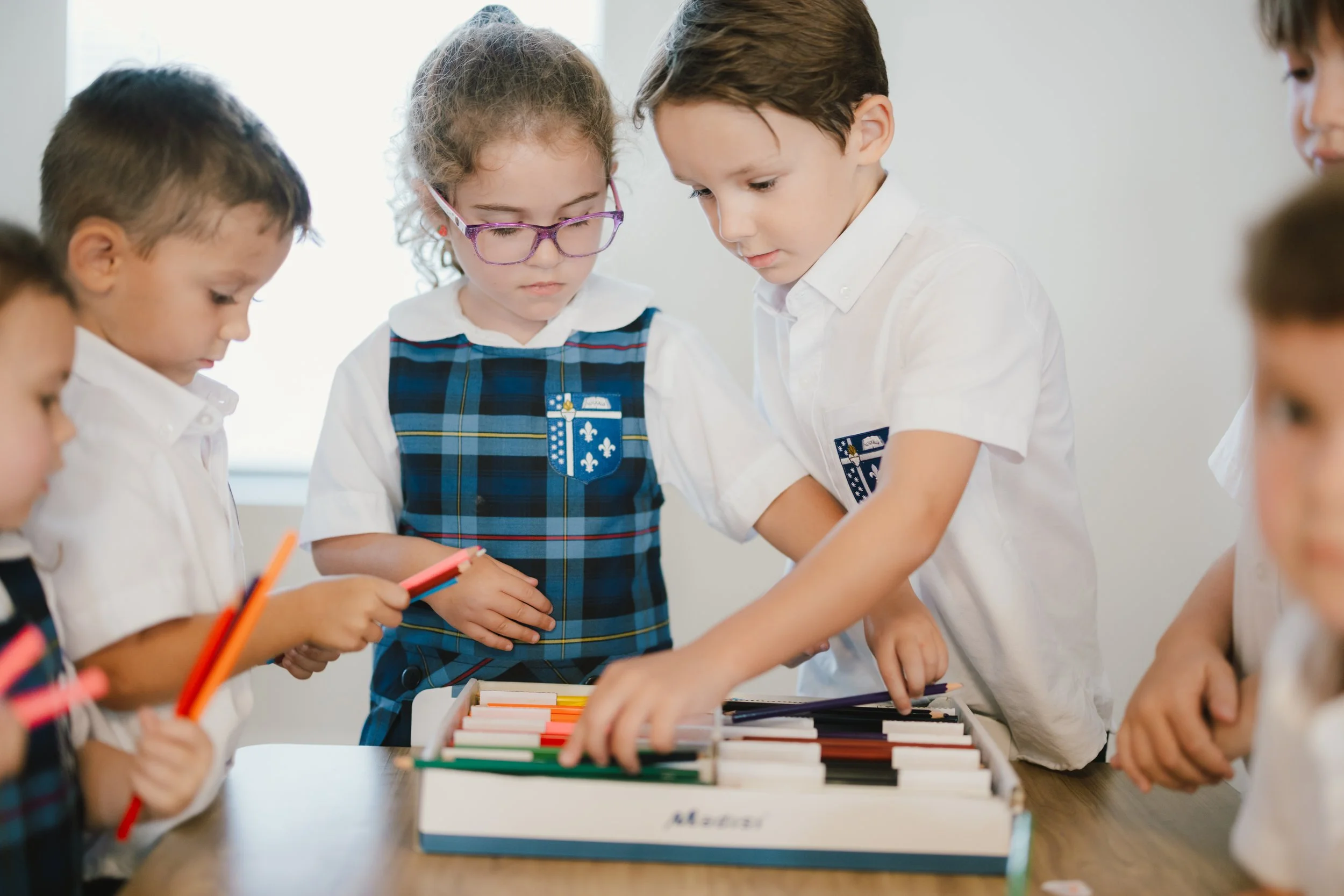
Classical Education follows the natural stages of child development for age-appropriate learning: the grammar stage, the logic stage, and the rhetoric stage. The Grammar Stage is where education all begins as we start with the basics of learning and knowledge. This stage is rooted in a natural curiosity for the world. Scholars are curious about the world around them while learning colors, grammar, reading and basic math.
-
Pre-K consists of basic educational elements through Memoria Press. These include mathematics, read-alouds, grammar, and history. Science gives these students a sense of wonder for the world around them and Pre-K starts building the foundation of Theology.
-
Kindergarten builds upon the foundations in Pre-K and begins scholars on the Saxon math track that runs through 8th grade. Kindergarten continues read-alouds alongside grammar, history, theology and science
-
First grade continues Saxon math, introduces short stories and builds upon the foundations of earlier years in grammar and history. Science begins the Good and the Beautiful modules that will continue through 7th grade, and Theology begins Spirit of Truth that will continue through 8th grade.
-
Second Grade continues the Saxon math track, science, history, theology, and classic short stories. Grammar begins the Institute of Excellence in Writing as students being learning the foundations of writing.
-
Third grade begins the historical sequence synonymous with classical education with the American World. This historical track begins a four year cycle of repeating historical cycles that build upon what was learned and expands on itself as the scholar grows. Math, Grammar, History, Science and Theology continue. Literature begins reading classic novels.
-
Fourth grade continues the historical cycles with The Ancient World. Math, Literature, Grammar, History, Science and Theology continue building upon the foundations established in previous years, and begin transition scholars to embrace the Logic stage.
Logic Stage
5th through 7th Grade
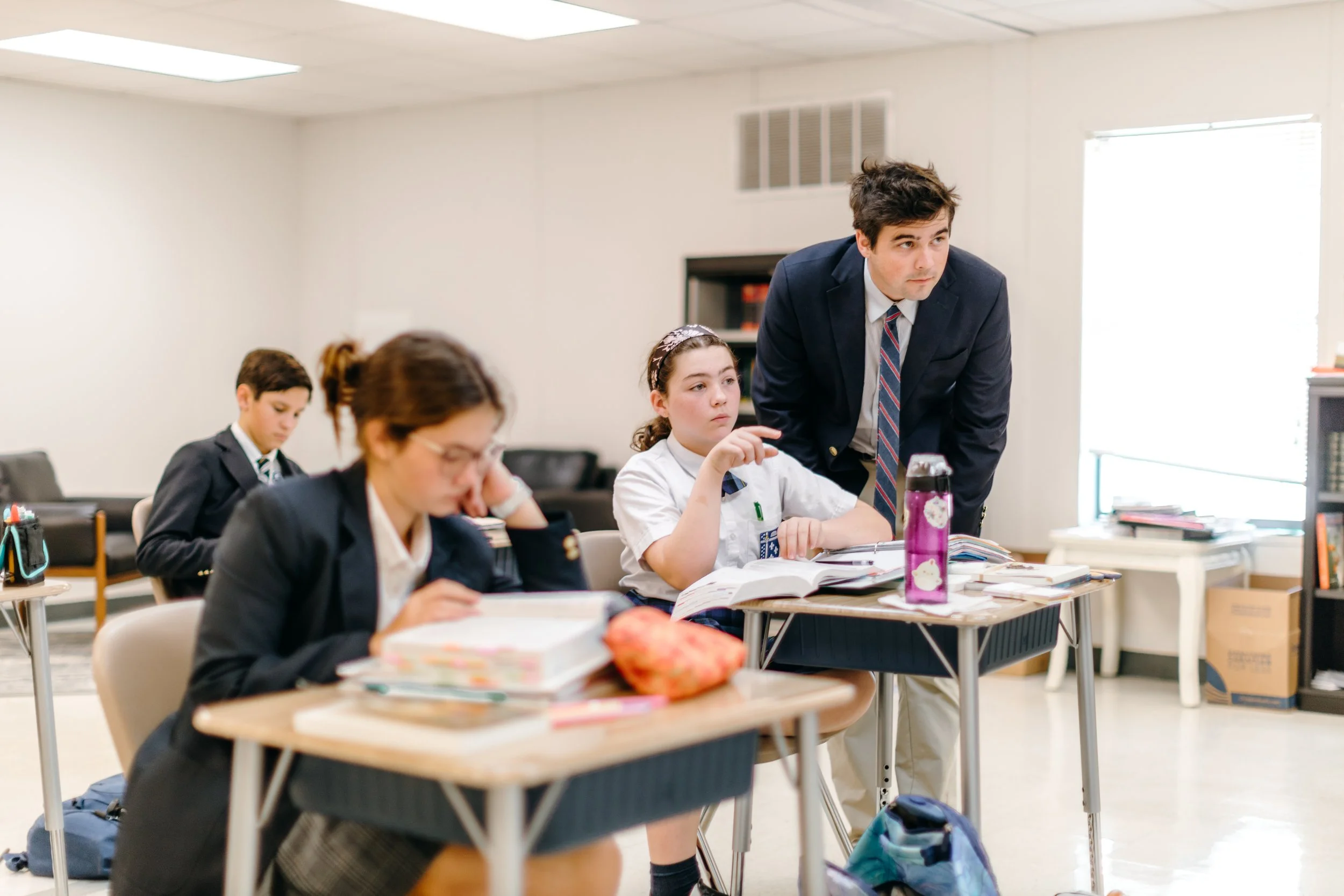
The Logic Stage is where scholars are beginning to think more analytically and ask the question “Why?” This is where deeper more philosophical knowledge is gained. Scholars are encouraged to pursue their natural propensity to argue, critique, judge, and question boundaries, seeking Truth for themselves. They no longer accept that which is merely told or commanded of them but instead desire to test and to think critically.
-
Fifth grade continues the historical cycle with the Early Medieval World, and continues tracks of Math, Literature, Grammar, History, Science and Theology. This grade begins the study of Latin.
-
Sixth grade continues the historical cycle with the High Middle Ages to the Renaissance, and continues tracks of Math, Literature, Grammar, History, Science and Theology. This grade builds upon the foundations learned in Latin from fifth grade.
-
Seventh grade continues the historical cycle with the Modern World, and continues tracks of Math, Literature, Grammar, History, Science and Theology. This grade builds upon the foundations learned in Latin from sixth grade, and begins learning the basics of Philosophy.
Enrichment Subjects
Beauty is essential to a complete education. Visual art teaches students more than technique. It cultivates creativity, careful observation, and the ability to express ideas with clarity and purpose. At the same time, students learn to recognize and thoughtfully evaluate great works of art, developing an appreciation for the beauty that has shaped Christian culture and Western civilization.
A complete education must include the development of the creative nature and must provide students with the tools and technique with which to express their ideas, their feelings and their love. It must also include the analytical skills with which to judge a work of art and exposure to great art. Finally, the mechanical skills and aesthetic aptitude must be put into the proper context of eternal Truth.
-
The classical approach to art is a traditional method focused on imitating objective order, mastering fundamental skills, and following universal principles of beauty, proportion, and harmony.
The Grammar Stage focuses on learning the basic vocabulary, elements of shape, color theory, and observing how light and value change.
The Logic stage focuses on applying these foundational rules to construct accurate, meaningful representations, such as mapping a figure from shadow to light.
-
Music appeals to the ear and the mind, the emotions and the intellect, the senses and the spirit. The Church has always considered music as an essential component of meditation and worship. It touches a “chord” and fills a need that is beyond what sight and words can achieve alone. In fact, few could deny that music is the most direct path to touching the soul. The power of music with our young people today is undeniable, and it is imperative that they should learn to recognize the difference between music that glorifies God, elevating the soul, and music that seeks to alienate us from Him.
The best way to learn music, of course, is to perform it. Students are given many opportunities to perform throughout the year.
-
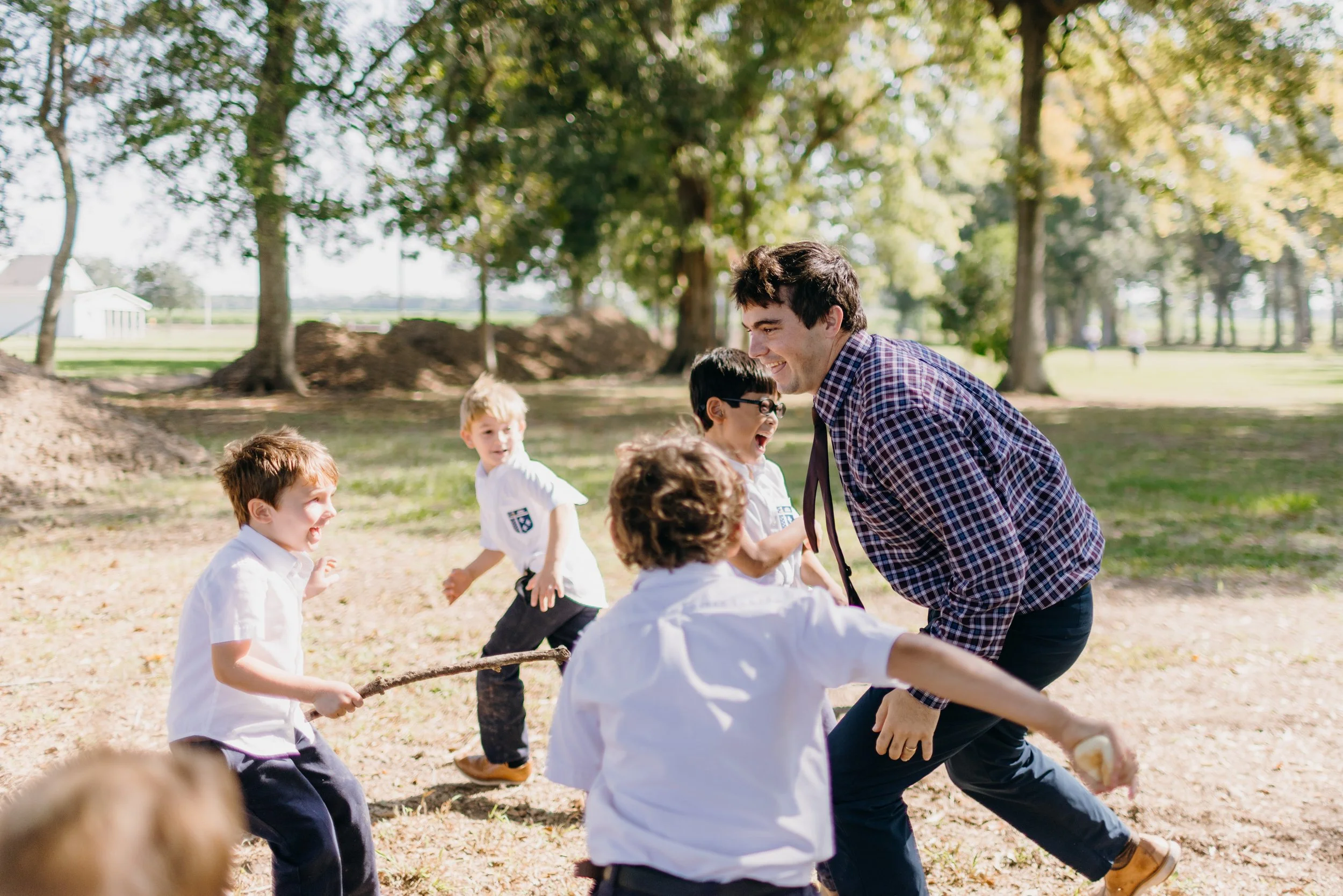
A classical approach to physical education treats the body and mind as an inseparable unit, aiming to cultivate human flourishing, virtue, and baseline physical competence rather than focusing solely on competitive sports or recreation.
The Grammar stage focuses heavily on basic motor skills, spatial awareness, foundational coordination, and fundamental movement patterns (such as balance, climbing, and calisthenics).
The Logic stage : Advances into higher-level sports, strategy analysis, and leadership, where students apply critical thinking to physical movement and navigate team dynamics virtuously